
The Apple That Was the Wrong Colour
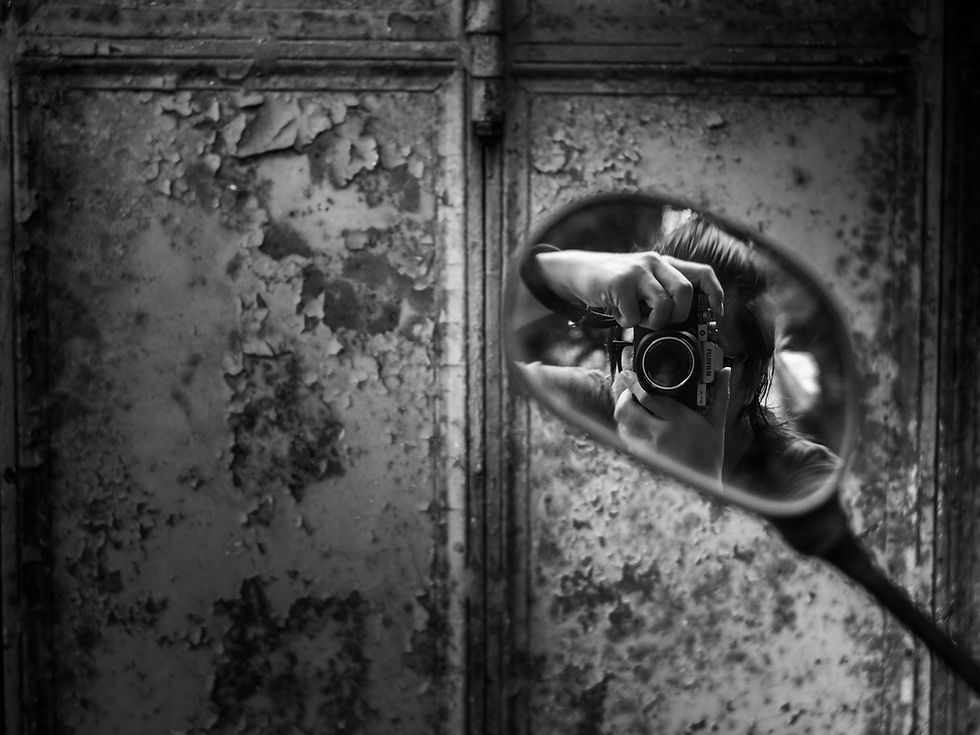
The crayons were kept in a shallow plastic tray at the corner of the classroom, their paper sleeves worn from being passed from one hand to another. Some had been sharpened unevenly, their tips flattened from pressing too hard against the page. When it was my turn, I reached for the green one.
On the sheet in front of me, the outline of an apple had already been drawn. Around me, the other children were filling theirs in with red. The movement was almost uniform, small hands moving back and forth within the lines. I remember pausing before I began, looking at the apples around me, then back at my own.
The green felt right.
I coloured it in slowly, pressing a little harder at the edges where the outline curved inward. The wax left a slightly uneven surface, darker in some places where the strokes overlapped. When I finished, I held the paper still, as if checking whether it looked complete.
Nothing about it seemed wrong.
The next day, the paper was no longer on my desk. It had been taken to the front of the class. I stood there while the teacher held it up, the green apple facing outward.
“There is no such thing as a green apple,” she said.
Her voice carried the firmness of someone certain. Around the room, I could feel the quiet attention of the other students, though no one said anything. I remember looking at the drawing, then back at her, trying to understand what had changed between the moment I coloured it and the moment it was called wrong.
“There is no such thing as a green apple,” she said.
I had eaten green apples before. They were sour, slightly sharper than the red ones, and my mother would sometimes slice them into smaller pieces and leave them on a plate. I could still remember the taste, the way the first bite would tighten my jaw before settling into something familiar.
Standing there, I tried to make sense of what I knew and what was being said.
The apple in my drawing had not changed. Only the way it was being seen had.
I do not remember what I said, or if I said anything at all. What I remember is the quiet confusion of holding onto something I had experienced, while being told, with complete certainty, that it did not exist.
A few days later, the teacher approached me again. This time, her voice was softer. She apologised, explaining that there were indeed green apples. I nodded, though I did not quite know what to do with the apology. By then, the moment had already settled into something I carried, though I did not fully understand it.
"The apple in my drawing had not changed. Only the way it was being seen had."
Back at my desk, the crayons were still in the same tray. The green one lay where it had been before, its tip slightly worn down. Around me, the other children continued with their work, heads bent over their papers, filling in shapes that had already been decided for them.
I began to notice how quickly anything unfamiliar could be called incorrect. Not through carelessness, but through a kind of quiet certainty, one that comes from having seen only one version of a thing, and learning to recognise it as the only one that exists.
It appeared in the way answers were corrected, and in the small hesitations that followed whenever something did not match what had been shown before.
The apple remained the same on paper, but the way it was held in the room had changed.
Even now, I sometimes return to that classroom in memory, not to the moment I was corrected, but to the moment before it, when the green crayon moved across the page without hesitation. There had been no uncertainty then, only the quiet act of colouring something as I had known it to be.
This happened in 1982, when I had just begun primary school. It was a small moment, easily forgotten among many others, but it has remained with me long after the drawing itself was gone.
Not as something that needed to be resolved, but as a small, steady reminder of how easily what we have seen becomes what we believe can be seen, and how quickly everything outside of it begins to feel unfamiliar, even when it has always been there.
Made In His Image
You are made perfectly. Loved deeply. Never beyond hope.
Visit the Made In His Image project at: madeinhisimage.life


Comments